Built on a real, connected store.
This isn't a demo dashboard — it's your live eBay store: real listings, real inventory, real catalog value, straight from the official Sell API.
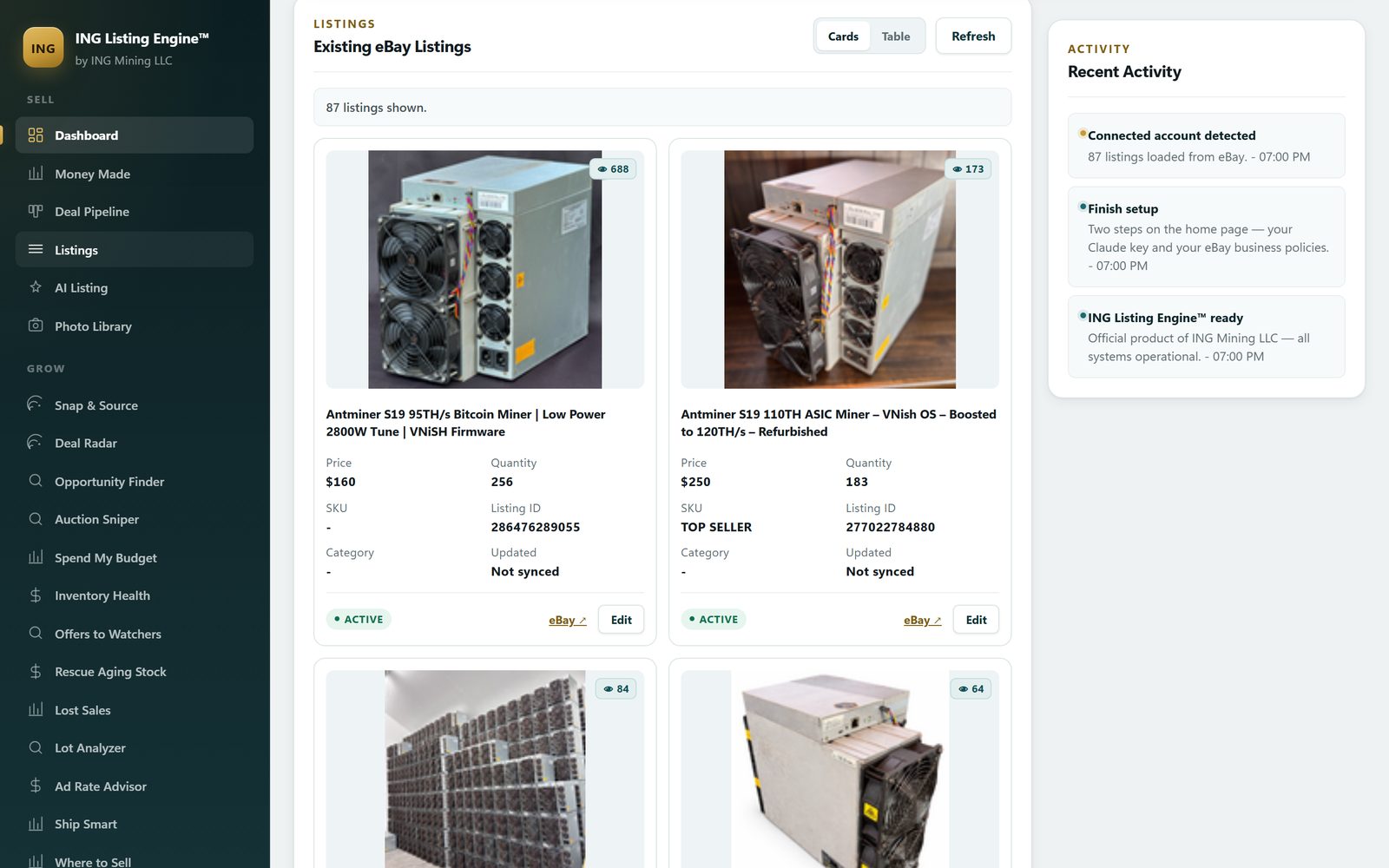
A lot of listing tools show you a pretty dashboard full of sample data. This one shows your store. Connect your eBay seller account once and the dashboard pulls your real listings, inventory quantities, view counts, and total catalog value directly from the official eBay Sell API.
What's live on the dashboard
- Active listings — everything currently live on your eBay account, as photo cards or a table.
- Inventory & catalog value — real quantities and the total value of your catalog at a glance.
- Needs-review queue — drafts and listings missing data, surfaced so nothing slips through.
- Two-way sync — import existing listings and publish new ones through the same official API.
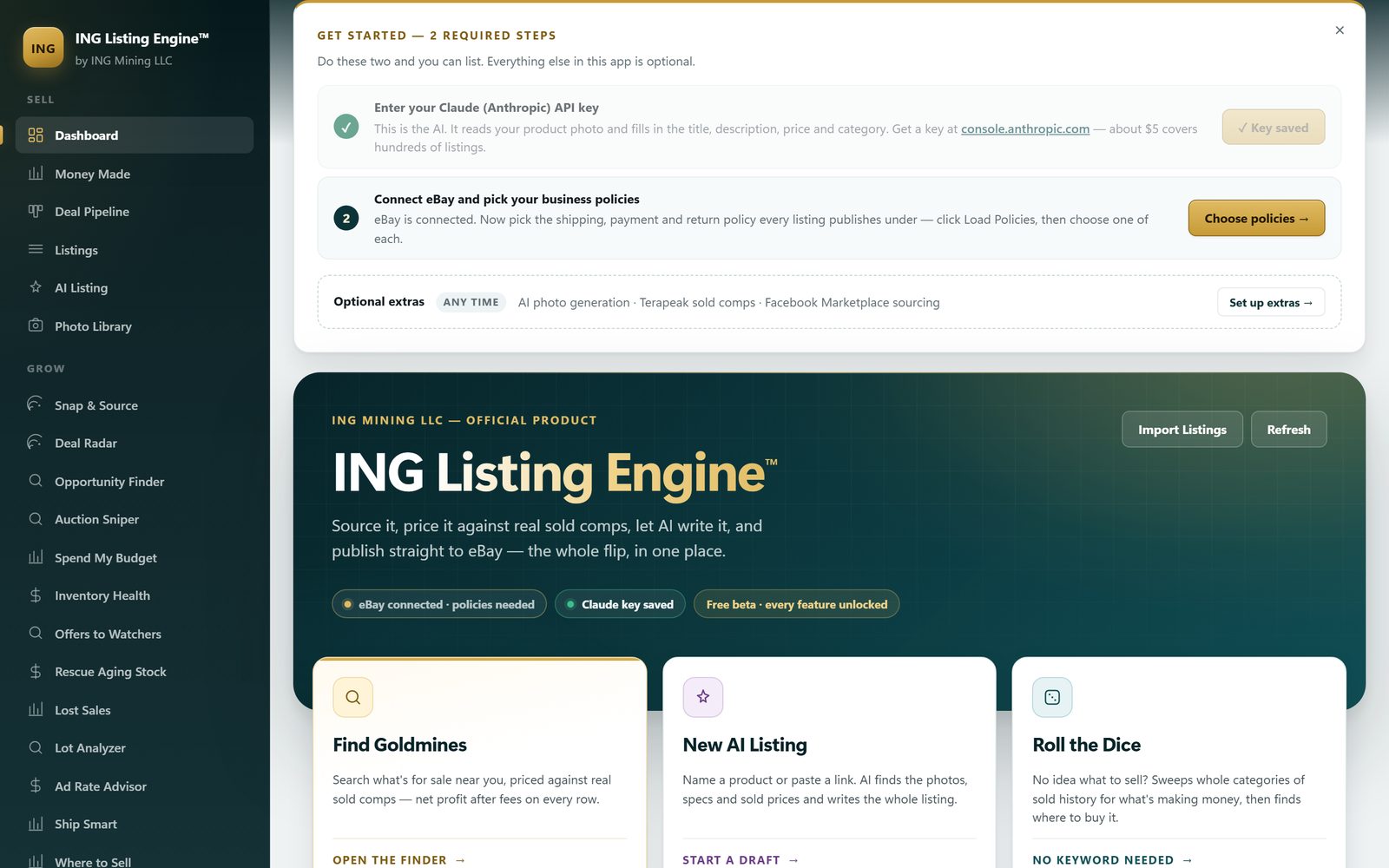
The screenshots on this page are the author's own eBay store — ASIC miners and datacentre hardware. Nothing here is sample data.
Why "official API" matters
Because it's built on eBay's Sell API — not screen-scraping — your data is accurate, your listings publish reliably, and your account stays in good standing. Connect once; the token refreshes automatically, so you only do it a single time.
Once the store is connected, two things get interesting: listing new items with AI, and repricing the money already sitting in the old ones.